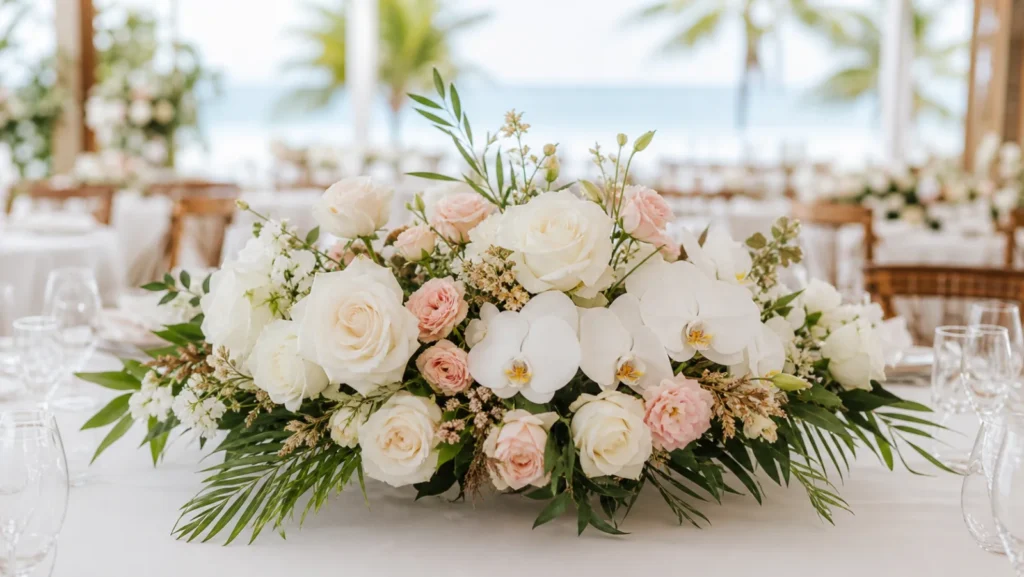
Wedding flowers shape the atmosphere of a celebration, but every area does not need the same level of decoration. A clear visual direction and a list of priorities help create impact while controlling cost and waste.
Define the mood before choosing varieties
Collect references for color, shape and overall feeling rather than insisting on an exact flower that may be difficult to source. A florist can translate a soft garden look, a modern tropical style or a formal palette into flowers suited to the date and venue.
Prioritize visible moments
The bridal bouquet, ceremony backdrop, entrance and main reception tables appear frequently in photographs. Focus the strongest designs there. Smaller supporting arrangements can repeat the same colors and foliage without duplicating the volume.
Plan around the venue
Outdoor heat, wind and transport time influence flower choices and installation. Share the ceremony and reception schedule, access restrictions and setup window with the florist. If locations are close, some arrangements may be moved from the ceremony to the reception.
Reuse with intention
Aisle flowers can decorate a welcome area later, and a ceremony piece can frame the couple’s table. Reuse works best when dimensions, stands and timing are planned in advance. At the end of the event, bouquets can be offered to guests or donated where appropriate, extending the enjoyment of the flowers.